Construction Begins on 182 Affordable Council Homes in Major Brentford Regeneration
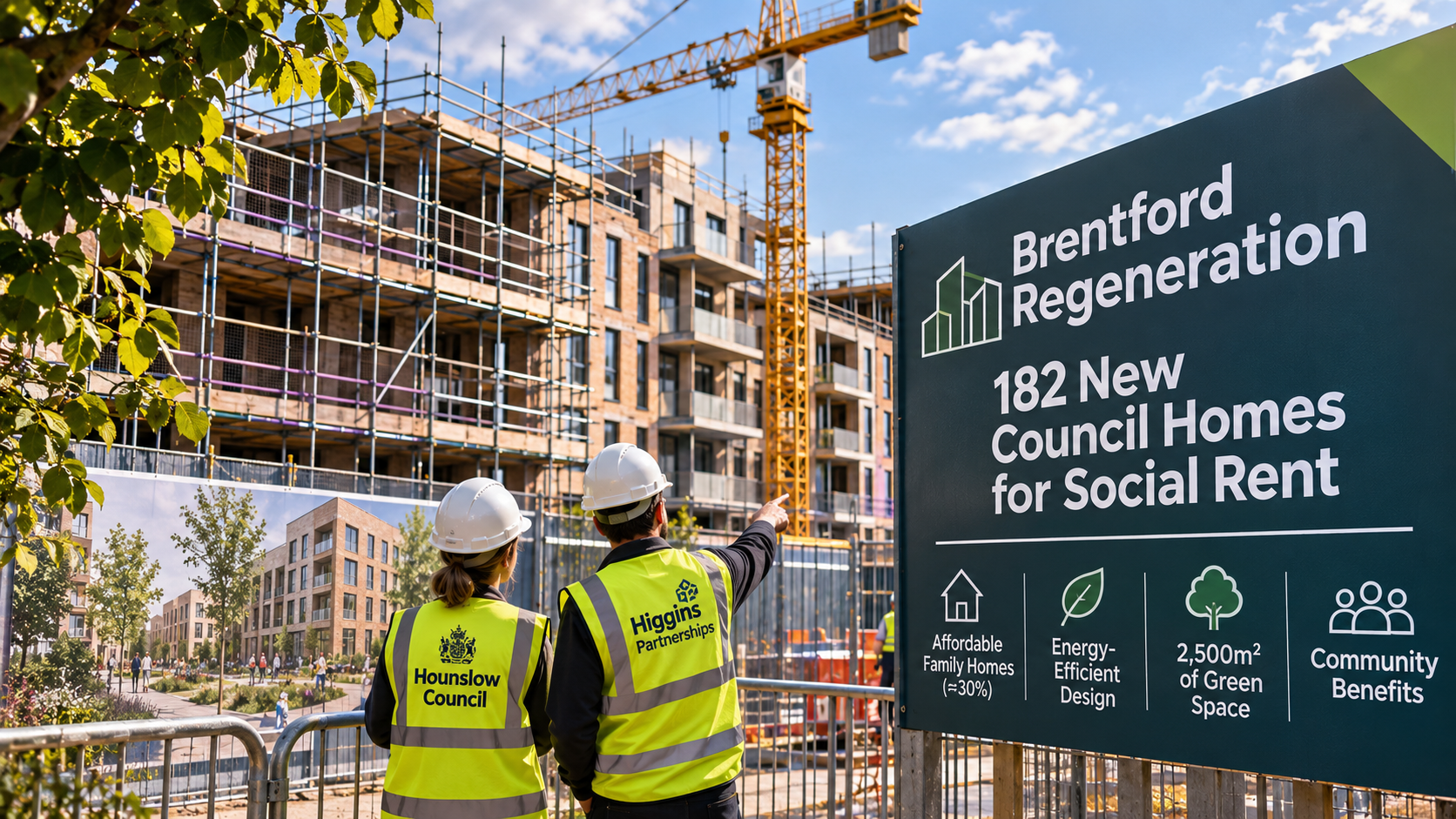
Construction has officially begun on a major housing regeneration project in Brentford, delivering 182 new council homes for social rent and transforming an existing residential neighbourhood.
The redevelopment of Charlton House and Albany House is being delivered by Hounslow Council in partnership with Higgins Partnerships, supporting the borough’s commitment to increasing affordable housing supply.
The scheme will replace 92 ageing properties with modern, energy-efficient homes designed to meet the needs of local residents.
Delivering More Affordable Family Housing
The development will provide 182 social rent properties, with approximately 30% designed as larger family homes.
This focus reflects growing demand for affordable family accommodation across London, where housing pressures continue to affect local communities.
Beyond increasing housing supply, the regeneration will introduce more than 2,500 square metres of landscaped green space and new ground-floor commercial facilities.
These improvements aim to create a more attractive, connected and sustainable neighbourhood while supporting local businesses.
Putting Residents at the Heart of Regeneration
Community engagement has played a central role in shaping the redevelopment, with more than 87% of residents supporting the proposals.
The project also includes commitments to delivering social value through employment, training and community initiatives.
Higgins Partnerships has pledged more than 750 volunteering hours to support local organisations and projects addressing homelessness, health and community wellbeing.
These commitments demonstrate how housing regeneration can deliver benefits beyond construction, creating opportunities for residents and strengthening local communities.
Supporting Long-Term Housing Ambitions
The Brentford development contributes to Hounslow Council’s wider programme to deliver 2,500 affordable homes across the borough.
By combining increased social housing provision with energy-efficient design and improved public spaces, the scheme reflects a broader shift towards community-focused regeneration.
For the housing sector, the project provides an example of how local authorities and development partners can collaborate to address housing shortages while improving neighbourhood quality.
As construction progresses, the development represents another important step towards delivering sustainable, affordable homes for London residents.